 MarketClaims
The MarketClaims Brief · Published research
US Government removes public access to a major Chinese AI model in 2026?
30 dated claims from 7 publishers are collected below, each with its source. 0 point toward YES and 8 against it; the rest are context. The research behind this brief is dated 22 November 2026. No direction or probability is published here: the claims and their sources are the brief.
In brief. 30 sourced claims from 7 publishers, dated 18 Nov to 22 Nov 2026. Polymarket prices this at 9% as of 22 Nov. Most recent: "The United States Director of National Intelligence, Jay Clayton, seemingly confirmed that China gained access to some of the US's advanced AI chips with restricted access." (Hindustan Times, 22 November 2026). The market closes 1 January 2027.
Tech brief. Evidence collected, research dated and published .
What the evidence does
- 0
- Toward yes
- 8
- Against yes
- 22
- Context
How this market settles
What could still go wrong
- 'Major Chinese AI model' requires the model to be a flagship, general-purpose LLM or multimodal foundation model — determining whether a specific model qualifies as 'flagship' or 'general-purpose' vs. narrow/special-purpose involves subjective judgment
- 'General removal of public access across ordinary public channels' is somewhat subjective — edge cases around partial restrictions or tiered access changes could cause disputes
- Causation requirement (action must 'directly' cause removal) may be ambiguous in cases where companies preemptively restrict access in anticipation of government action vs. in response to it
- The list of qualifying companies is enumerated but future model releases or company rebranding could create ambiguity about coverage
- No single authoritative government registry for 'formal actions' that restrict AI model access — resolution relies on consensus of credible reporting which introduces subjectivity
Evidence you can inspect These labels describe how a claim relates to the question. They are not recommendations or independent votes.
Evidence supporting YES 0 claims
No claims in this category. Absence here is a coverage limit, not a finding.
Evidence challenging YES 8 claims
 Against yes
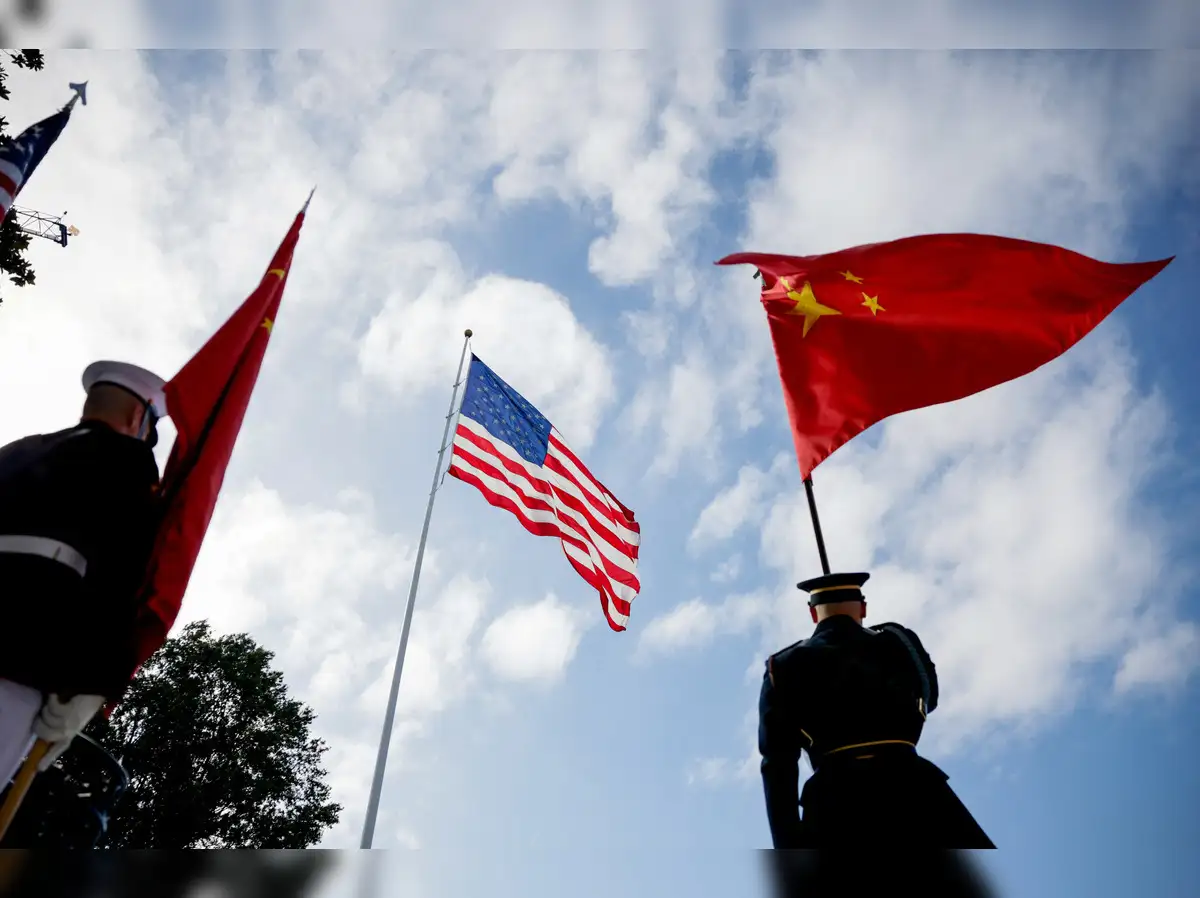
The Trump administration is exploring a plan to require companies to disclose their use of Chinese AI models.
Economic Times published Source publicationEconomic Timespublished Against yesThe initiative intends to discourage reliance on Chinese technology by increasing transparency without imposing harsh regulations.
Economic Times published Source publicationEconomic Timespublished Against yesThe Treasury Department and the White House Office of Science and Technology Policy (OSTP) have discussed the plan, which would apply to companies such as Airbnb.
Economic Times published Source publicationfinancieel.headliner.nlpublished Against yesThe Trump administration is considering requiring American companies to disclose when they use Chinese AI models.
financieel.headliner.nl published Source publicationfinancieel.headliner.nlpublished Against yesThe measure is intended to be a form of public pressure to discourage the use of Chinese models without imposing new bans or sanctions directly.
financieel.headliner.nl published Source publicationEconomic Timespublished Against yesUnder the plan, companies like Airbnb would be required to post that information on their websites.
Economic Times published Source publicationfinancieel.headliner.nlpublished Against yesThe Department of the Treasury and the White House Office of Science and Technology Policy (OSTP) discussed this plan according to three insiders.
financieel.headliner.nl published 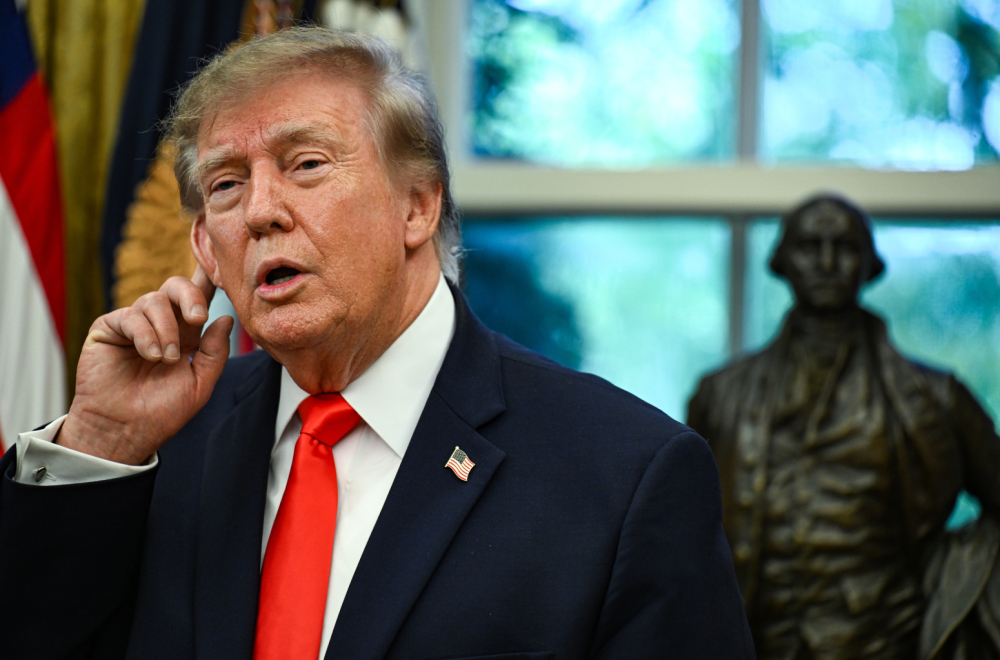 Against yes
The White House is considering requiring U.S. companies to publicly disclose their use of Chinese AI models, according to three sources quoted by Reuters.
B92 published
Context 22 claims
Source publicationc14.co.ilpublished ContextThe initiative was discussed in recent months between the U.S. Department of the Treasury and the White House Office of Science and Technology.
c14.co.il published Source publicationc14.co.ilpublished ContextThe initiative is expected to apply to leading companies such as Airbnb, DoorDash, and Cursor.
c14.co.il published Source publicationEconomic Timespublished ContextCongressional investigations have been launched to scrutinize American companies adopting Chinese AI.
Economic Times published Source publicationEconomic Timespublished ContextChinese-made open-weight models are gaining ground with US companies because they are cheaper than proprietary AI tools from top US labs.
Economic Times published Source publicationEconomic Timespublished ContextUS Treasury Secretary Scott Bessent said in July that the Trump administration could sanction Chinese AI companies if they were found to be guilty of intellectual property theft via distillation of American models.
Economic Times published Source publicationEconomic Timespublished ContextRepublican US Representatives Andrew Garbarino of New York and John Moolenaar of Michigan launched an investigation into American companies' use of Chinese AI this year.
Economic Times published Source publicationfinancieel.headliner.nlpublished ContextAirbnb is mentioned as a potential example of a company using Alibaba's Qwen model for an AI customer service agent.
financieel.headliner.nl published Source publicationfinancieel.headliner.nlpublished ContextThe US is concerned about the growth of Chinese open-weight models, whose core technology can be freely downloaded and modified.
financieel.headliner.nl published Source publicationfinancieel.headliner.nlpublished ContextCritics within the government fear that China is making American companies dependent on its technology and potentially exploiting intellectual property from American AI labs.
financieel.headliner.nl published Source publicationfinancieel.headliner.nlpublished ContextAirbnb says it primarily uses American models and only uses Chinese models to a limited extent through approved US service providers.
financieel.headliner.nl published Source publicationfinancieel.headliner.nlpublished ContextRepublican representatives Andrew Garbarino and John Moolenaar sent letters about this to companies including Airbnb, DoorDash, and Anysphere, the maker of Cursor.
financieel.headliner.nl published Source publicationHindustan Timespublished ContextThe United States Director of National Intelligence, Jay Clayton, seemingly confirmed that China gained access to some of the US's advanced AI chips with restricted access.
Hindustan Times published Source publicationHindustan Timespublished ContextOn November 17, the Trump administration moved to restrict Chinese companies from remotely accessing Nvidia's chips from data centres in third countries.
Hindustan Times published Source publicationHindustan Timespublished ContextJay Clayton suggested that advanced AI chips from the US may have been accessed unlawfully by China.
Hindustan Times published Source publicationHindustan Timespublished ContextBetween 2022 and 2024, the US imposed incremental restrictions on exports of advanced semiconductor chips to China.
Hindustan Times published Source publicationBhaskar Live English Newspublished ContextJay Clayton defended technology-export restrictions on China and Washington's engagement with Russia.
Bhaskar Live English News published Source publicationBhaskar Live English Newspublished ContextJay Clayton argued that Washington should protect its most advanced capabilities while allowing less sophisticated technology to support infrastructure worldwide.
Bhaskar Live English News published 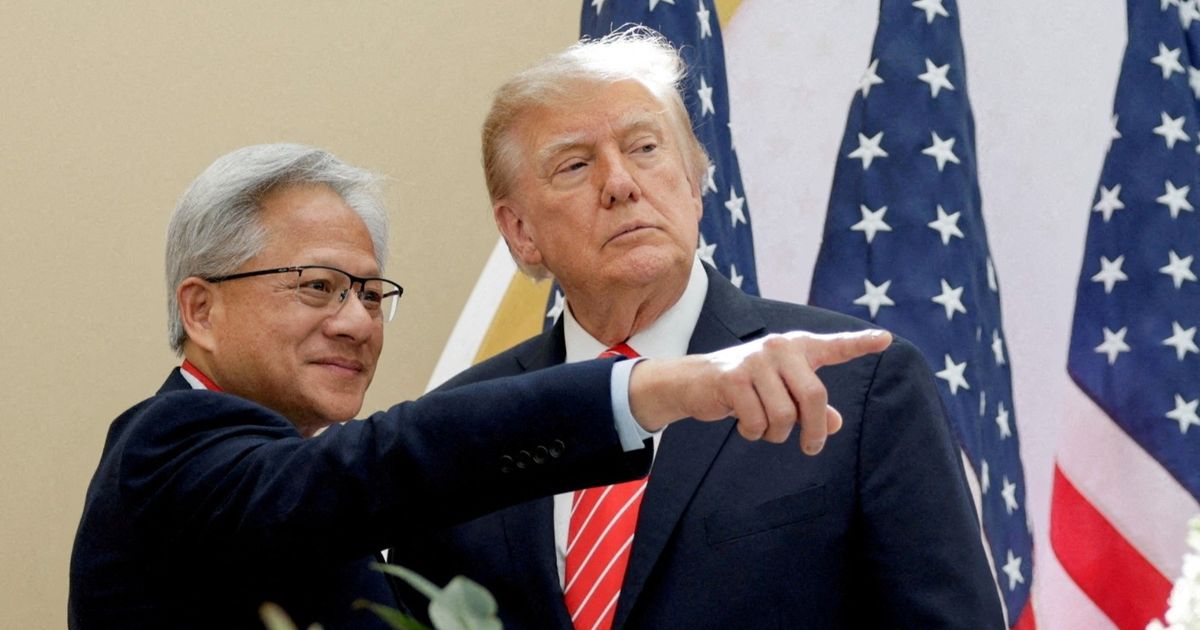 Context
Director of National Intelligence Jay Clayton speculated that China had obtained advanced AI chips from NVIDIA through unspecified channels.
Asharq News published Source publicationAsharq Newspublished ContextAuthorities in the Southern District of New York had filed legal charges against a company for attempting to divert advanced AI chips to China.
Asharq News published Source publicationAsharq Newspublished ContextThe U.S. was intensifying scrutiny over the delivery of advanced AI chips to China due to a scandal involving NVIDIA.
Asharq News published Source publicationB92published ContextThe plan has been discussed by representatives of the U.S. Department of the Treasury and the White House Office of Science and Technology Policy (OSTP), and would apply to companies like Airbnb.
B92 published Source publicationB92published ContextAirbnb uses Qwen, an AI model developed by Chinese corporation Alibaba for its AI customer support agent.
B92 published
Who reported it 7 publishers, each setting its own name
- Economic Times 8
- financieel.headliner.nl 8
- Hindustan Times 4
- Asharq News 3
- B92 3
- Bhaskar Live English News 2
- c14.co.il 2
What this brief cannot settle
This brief was assembled automatically from a research report that met a published quality bar. No individual review. It rests on 30 claims from 7 publishers; anything not reported in those sources is not represented here. The report recorded 5 resolution risks, listed with this brief.
Since the previous brief
Publication history (2 recorded revisions)
- Published · research dated
- Published · research dated
Compared with research dated
This revision replaces research dated 18 November 2026 with research dated 22 November 2026. 22 of 33 cited sources are new; 11 are carried over.
Get this in your group chat: send /research with any market link to our Telegram bot or Discord app. Free, no account.
More published research
Tech ·
Will Google be the first company to have an AI model hit 1550 on Chatbot Arena in 2026?
30 dated claims from 7 publishers are collected below, each with its source. 4 point toward YES and 0 against it; the rest are context. The research...
Tech ·
Will Google release next Gemini Pro model before Dec 1, 2026?
30 dated claims from 5 publishers are collected below, each with its source. 8 point toward YES and 0 against it; the rest are context. The research...
Tech ·
What will be the top AI model on Nov 30, 2026? (Gemini 4 Carbon (High))
30 dated claims from 10 publishers are collected below, each with its source. 14 point toward YES and 0 against it; the rest are context. The research...