 MarketClaims
The MarketClaims Brief · Published research
Will Democrats hold 218 or more seats in the House after the 2026 midterms AND hold 49 or more seats in the Senate after the 2026 midterms? (Will Democrats hold 218 or more seats in the House AND hold
30 dated claims from 8 publishers are collected below, each with its source. 13 point toward YES and 2 against it; the rest are context. The research behind this brief is dated 3 November 2026. No direction or probability is published here: the claims and their sources are the brief.
Politics brief. Evidence collected, research dated and published .
This is an older research snapshot. It may miss subsequent developments.
What the evidence does
- 13
- Toward yes
- 2
- Against yes
- 15
- Context
The question, as the venue words it
Will Democrats hold 218 or more seats in the House after the 2026 midterms AND hold 49 or more seats in the Senate after the 2026 midterms? (Will Democrats hold 218 or more seats in the House AND hold 49 or more seats in the Senate?)
How this market settles
What could still go wrong
- Vacancies or unfilled seats on February 1, 2027 could affect seat counts ambiguously — unclear if vacant seats are counted toward party totals.
- If a member switches parties or caucus affiliation between election and February 1, 2027, it could affect resolution but the treatment is not fully specified.
- The phrase 'after the 2026 midterms' in the title implies post-election composition, but the resolution date of February 1, 2027 could differ from the official certification or swearing-in date, creating a potential gap.
- No explicit official source (e.g., Clerk of the House, Secretary of the Senate) is named for determining seat counts, which could lead to disputes.
- The market references Kalshi ruleset SEATSCONGRESS but does not reproduce its full text, leaving some edge cases (e.g., special elections between November 2026 and February 1, 2027) potentially unresolved.
Evidence you can inspect These labels describe how a claim relates to the question. They are not recommendations or independent votes.
Evidence supporting YES 13 claims
 Toward yes
Polymarket projected a 72% chance for the Democratic Party to win both the House and the Senate, and a 23% chance for the Democrats to take the House while Republicans retain the Senate
First-Class 경제신문 파이낸셜뉴스 published 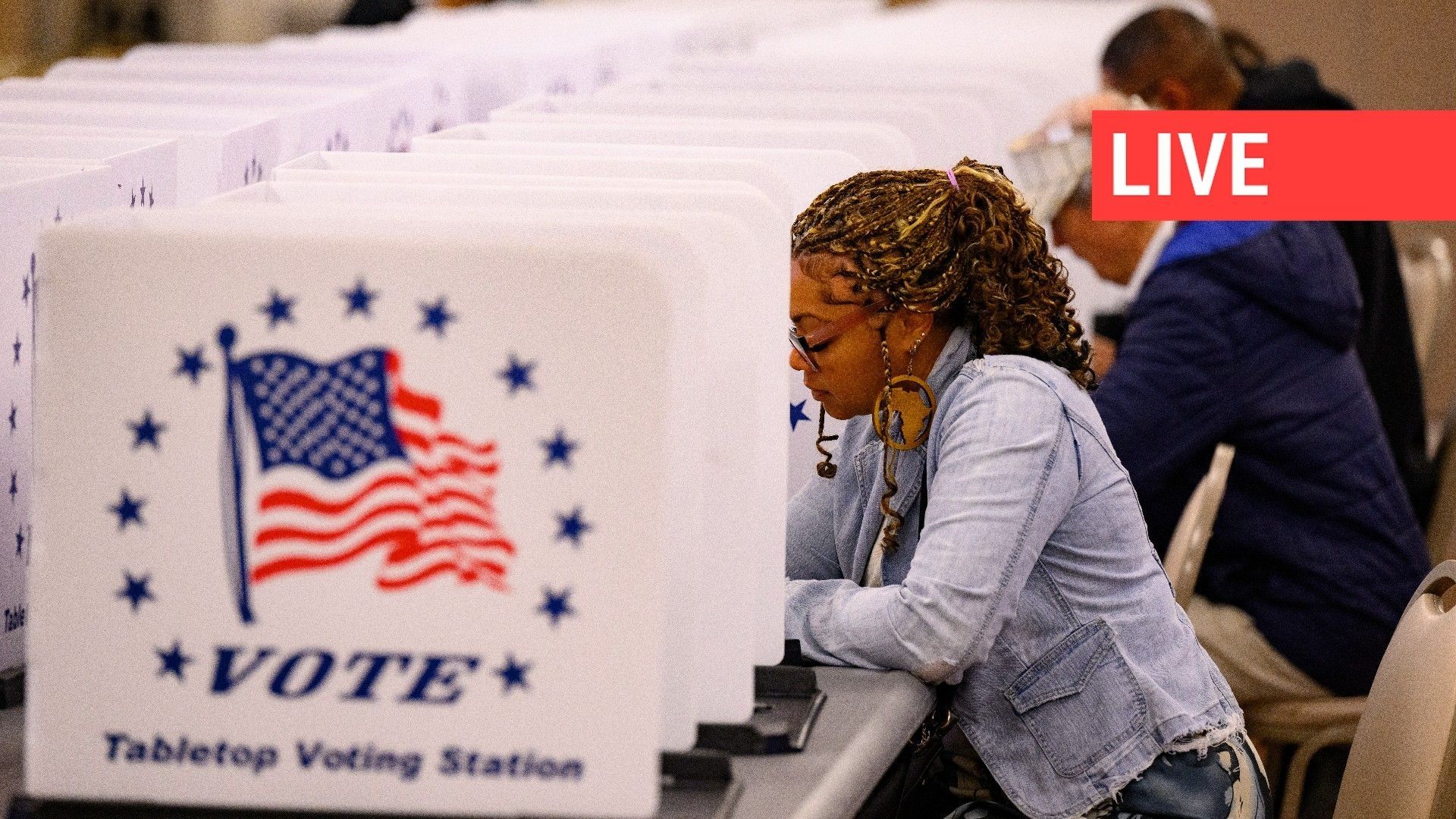 Toward yes
The Democrats aim to gain a majority of seats in the House of Representatives to block the policies of Donald Trump's administration
RTBF published Source publicationFirst-Class 경제신문 파이낸셜뉴스published Toward yesThe election data and analysis firm Decision Desk HQ (DDHQ) estimated the Democratic Party's chances of winning the House at 84%, projecting 241 seats for the Democrats
First-Class 경제신문 파이낸셜뉴스 published Source publication20 Minutenpublished Toward yesThe Democratic Party is expected to win the House of Representatives, as Republicans hold the narrowest majority since the 1930s, and the president's party almost always loses seats in midterm elections
20 Minuten published Source publicationFirst-Class 경제신문 파이낸셜뉴스published Toward yesThe prediction service Scrutinel, which estimates seat counts and win probabilities using election polls and political data, assessed the Democratic Party's likelihood of winning the House at 95% and the Senate at 76%, with projected seat counts of 240 for the House and 52 for the Senate
First-Class 경제신문 파이낸셜뉴스 published Source publicationGazete Oksijenpublished Toward yesAccording to the latest election ratings from the nonpartisan Cook Political Report, Democrats could reach up to 240 seats in the House of Representatives
Gazete Oksijen published Source publicationRTBFpublished Toward yesAccording to the latest polls, this scenario of Democrats gaining a majority in the House of Representatives could well come true
RTBF published Source publicationFirst-Class 경제신문 파이낸셜뉴스published Toward yesAnother online prediction market, Kalshi, estimated the Democratic Party's probability of winning the House at 94% and the Senate at 73%, with a 71% chance of winning both chambers
First-Class 경제신문 파이낸셜뉴스 published Source publicationFirst-Class 경제신문 파이낸셜뉴스published Toward yesThe online prediction market Polymarket assessed the Democratic Party's chances of winning the House at 95% and the Senate at 73% on November 2nd
First-Class 경제신문 파이낸셜뉴스 published Source publicationGazete Oksijenpublished Toward yesIn Michigan, outside of the seven critical states, Democrats are leading, while in Alaska, Democrats hold a slight advantage
Gazete Oksijen published Source publicationGazete Oksijenpublished Toward yesDemocrats appear to have a significant advantage in taking control of the House of Representatives
Gazete Oksijen published Source publication20 Minutenpublished Toward yesDemocrats currently hold a nine-percentage-point lead over Republicans on a national level when voters are asked whether they would prefer to elect a Republican or a Democrat
20 Minuten published Source publicationFirst-Class 경제신문 파이낸셜뉴스published Toward yesUSA Today reported that based on final polls and election prediction models released before the election, the Democratic Party holds an advantage, particularly in House races
First-Class 경제신문 파이낸셜뉴스 published
Evidence challenging YES 2 claims
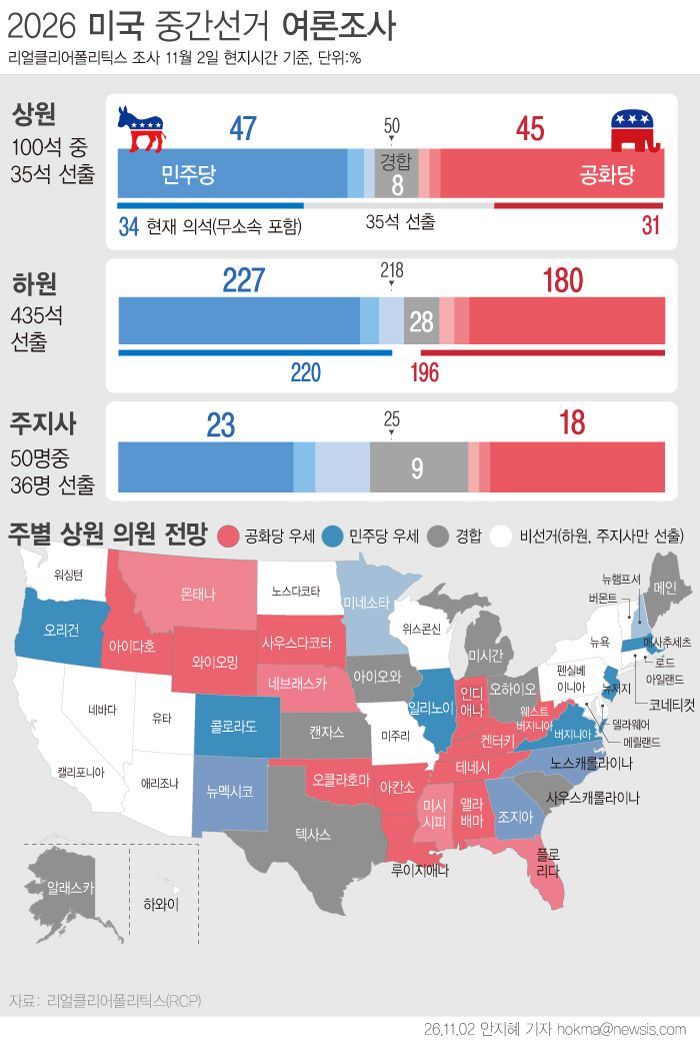
Source publicationAnadolu Ajansıpublished Against yesBased on data compiled by RealClearPolitics (RCP), Democrats are projected to win 47 Senate seats, while Republicans are projected to win 44
Anadolu Ajansı published Source publicationAnadolu Ajansıpublished Against yesThere are 9 Senate seats where the race is tied, with 8 leaning Republican and 1 leaning Democrat
Anadolu Ajansı published
Context 15 claims
Source publicationstern.depublished ContextIn the Senate, Republicans currently hold 53 seats and Democrats hold 45, with two members being unaffiliated
stern.de published Source publicationstern.depublished ContextCurrently, the Republicans hold a slim majority in the House of Representatives with 218 seats to the Democrats' 214, and two seats are vacant
stern.de published Source publicationstern.depublished ContextIf the ruling Republicans lose their majorities in the House of Representatives and the Senate, the Democrats are expected to make Donald Trump's final two years in office difficult
stern.de published Source publicationFrankfurter Rundschaupublished ContextThe party that wins the majority of the 435 seats in the Midterms automatically appoints all committee chairpersons in the House of Representatives
Frankfurter Rundschau published  Context
According to averages of national polls, Democrats appear to have an advantage in both the House of Representatives and the Senate, but the outcome is expected to be determined by closely contested races in specific districts
Anadolu Ajansı published Source publicationHersfelder Zeitungpublished ContextWhile the entire House of Representatives is up for election, only about a third of the Senate seats are up for election periodically
Hersfelder Zeitung published Source publicationAnadolu Ajansıpublished ContextIn the United States, elections are being held today for all 435 seats in the House of Representatives and 35 of the 100 seats in the Senate
Anadolu Ajansı published Source publicationstern.depublished ContextThe US Congress is composed of two chambers: the Senate and the House of Representatives
stern.de published Source publication20 Minutenpublished ContextThe Democratic Party needs to gain four additional seats in the Senate to secure a majority, with North Carolina being a likely win, and three more seats needed from a group of six states: Texas, Alaska, Maine, Iowa, Kansas, and Ohio
20 Minuten published Source publicationRTBFpublished ContextThese elections also aim to renew approximately one-third of the Senate, also known as the upper house
RTBF published Source publicationstern.depublished ContextIf the opposition gains a majority in the House of Representatives after the midterms, the US President must govern against the parliament
stern.de published Source publicationAnadolu Ajansıpublished ContextIn the House of Representatives, the party that reaches 218 seats will achieve a majority
Anadolu Ajansı published Source publicationFrankfurter Rundschaupublished ContextThe House of Representatives is considered a direct reflection of the American population and the starting point for congressional oversight of the White House
Frankfurter Rundschau published Source publicationFrankfurter Rundschaupublished ContextThe results of the 2026 Midterm elections are highly anticipated, with the House of Representatives election being a key focus
Frankfurter Rundschau published Source publication20 Minutenpublished ContextSince 1998, polls have tended to underestimate Democrats slightly more often than Republicans, although Trump-related polling errors were more spectacular
20 Minuten published
Who reported it 8 publishers, each setting its own name
- First-Class 경제신문 파이낸셜뉴스 6
- Anadolu Ajansı 5
- stern.de 5
- 20 Minuten 4
- Frankfurter Rundschau 3
- Gazete Oksijen 3
- RTBF 3
- Hersfelder Zeitung 1
What this brief cannot settle
This brief was assembled automatically from a research report that met a published quality bar. No individual review. It rests on 30 claims from 8 publishers; anything not reported in those sources is not represented here. The report recorded 5 resolution risks, listed with this brief.
Since the previous brief
Publication history (1 recorded revisions)
- Published · research dated
This is the first published brief for this event. No comparison is available.
More published research
Politics ·
Israel x Hamas Ceasefire Phase II by December 31?
30 dated claims from 10 publishers are collected below, each with its source. 0 point toward YES and 11 against it; the rest are context. The research...
Politics ·
US announces Cuba oil sanction relief by December 31?
25 dated claims from 6 publishers are collected below, each with its source. 0 point toward YES and 12 against it; the rest are context. The research...
Politics ·
Trump meets with Putin by November 30?
30 dated claims from 16 publishers are collected below, each with its source. 23 point toward YES and 0 against it; the rest are context. The research...