 MarketClaims
The MarketClaims Brief · Published research
Will permanent daylight savings become law before Jan 1, 2027?
30 dated claims from 16 publishers are collected below, each with its source. 1 point toward YES and 5 against it; the rest are context. The research behind this brief is dated 5 November 2026. No direction or probability is published here: the claims and their sources are the brief.
Politics brief. Evidence collected, research dated and published .
This is an older research snapshot. It may miss subsequent developments.
What the evidence does
- 1
- Toward yes
- 5
- Against yes
- 24
- Context
How this market settles
What could still go wrong
- No official resolution source specified by the market.
Evidence you can inspect These labels describe how a claim relates to the question. They are not recommendations or independent votes.
Evidence supporting YES 1 claim
 Toward yes
The House of Representatives recently passed a bill proposing a permanent change to daylight saving time (DST), with support from President Donald Trump
Courier published
Evidence challenging YES 5 claims
 Against yes
Colorado falls back while Congress stalls. Give us your opinion on Daylight Savings Time and be enterd in the Estes Valley Voice drawing for an Amazon Echo Spot smart clock. Chicago's 1970 hit "Does Anybody Really Know What Time It Is?" could almost be the existential theme song for America's perennial debate over daylight saving time. Sur
Estes Valley Voice published  Against yes
Where do permanent Daylight Saving Time efforts stand in Kansas, Missouri and Congress?. Clocks fell back early Sunday morning, but recent state and federal pushes aim to make daylight saving time permanent, including a congressional bill that still needs the Senate. KANSAS CITY, Mo. -- KSHB 41 reporter Claire Bradshaw covers eastern Jackson County, including Blue Springs and Grain Val
KSHB 41 Kansas City News published 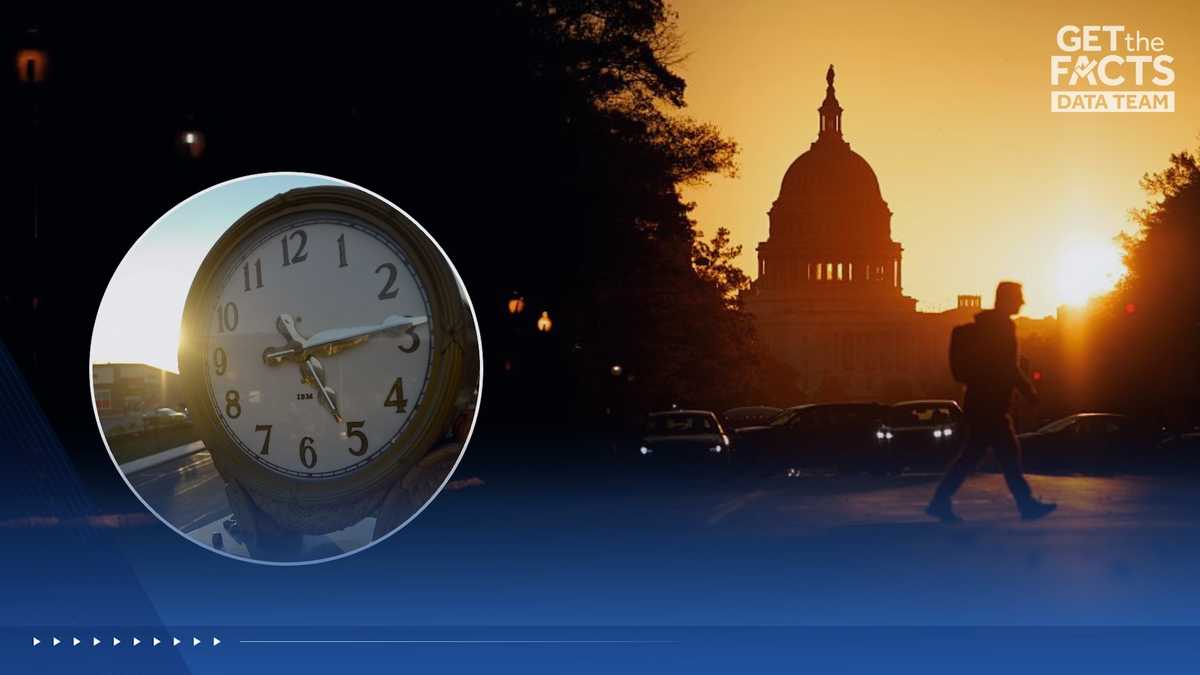 Against yes
Search your ZIP code: How sunrises look under permanent daylight saving time. Search your ZIP code to see when your sunrise and sunset would be if the US got rid of the clock change The U.S. House of Representatives passed a bill back in July that would make daylight saving time permanent. Since then, the Sunshine Protection Act has stalled in the Senate, meaning the clocks
KOCO published Source publicationSciTechDailypublished Against yesA bill to make daylight saving time permanent, ending the fall return to standard time, has passed the U.S. House of Representatives but is currently stalled in the U.S. Senate
SciTechDaily published  Against yes
President Trump has urged the Senate to approve the Sunshine Protection Act, but there is a disagreement among lawmakers regarding whether to adopt permanent Daylight Saving Time or permanent Standard Time
103.5 KISSFM published
Context 24 claims
 Context
Nineteen states, including Washington, have already approved measures supporting the change to permanent daylight saving time, which would take effect in those states if the federal bill becomes law
ScienceDaily published Source publicationScienceDailypublished ContextA nationwide switch to permanent daylight saving time could result in at least 2 billion additional trips to school in darkness for American children, potentially increasing safety risks and reducing exposure to morning sunlight
ScienceDaily published Source publicationScienceDailypublished ContextPermanent daylight saving time would push sunrise an hour later during the winter months, leaving mornings darker from November through March
ScienceDaily published Source publicationScienceDailypublished ContextIn Washington state alone, permanent daylight saving time would produce nearly 35 million additional school commutes in darkness
ScienceDaily published Source publicationScienceDailypublished ContextGeorgia could see approximately 71 million additional dark school trips under permanent daylight saving time
ScienceDaily published  Context
Expert says standardizing daylight saving time "is always going to be helpful"
CBS News published Source publicationThe Hillpublished Source publicationaspublished ContextDid Daylight Saving Time already happen: Exact time when 2026 clocks fall back in the U.S.
as published  Context
Daylight saving time ends tonight. Here's when to set your clocks back
Los Angeles Times published 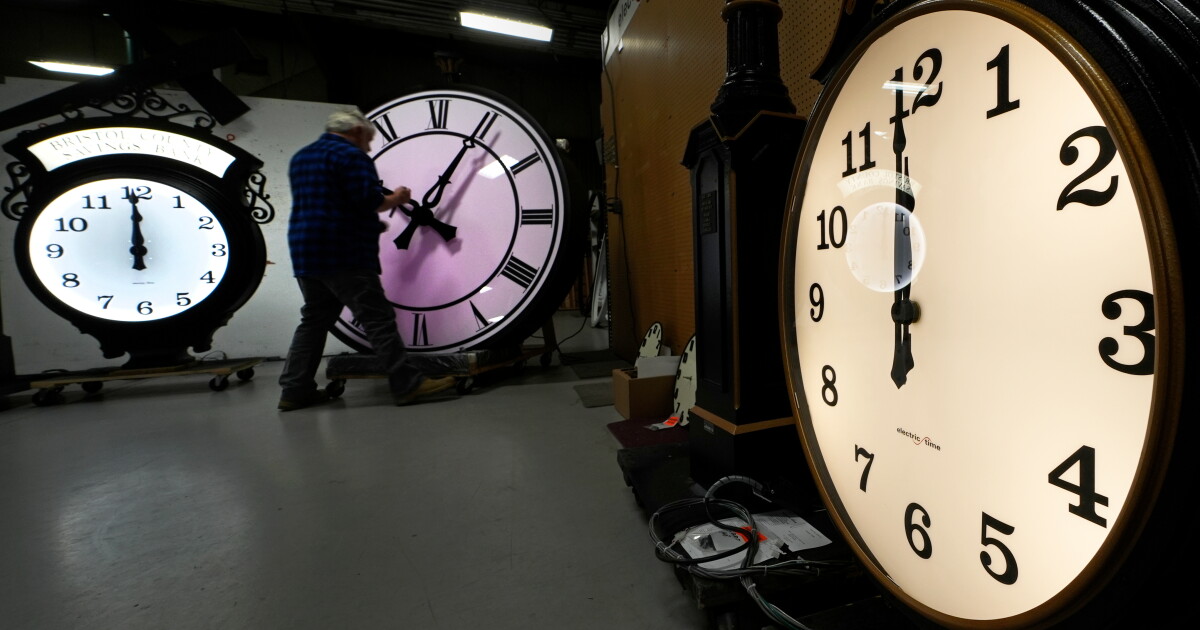 Context
INTERACTIVE: What ending daylight saving time would mean for you. A bipartisan House vote, a presidential endorsement, and a poll showing most Americans want out. Here's where the clock-change debate actually stands -- and what the end of daylight saving time would mean for your daily life. Sunday morning, most Americans will lose an hour of evening light and gai
KXLH News Helena published Source publicationSciTechDailypublished ContextNineteen states have pre-approved the change to permanent daylight saving time, which would take effect in those states if the bill is signed into law
SciTechDaily published  Context
Professional sleep organizations advocate for permanent standard time (ST) as it aligns better with human circadian physiology than permanent daylight saving time (DST) or the current alternating system in the U.S
Psychology Today published Source publicationSciTechDailypublished ContextWashington state would experience nearly 35 million additional dark school commutes under permanent daylight saving time, while Georgia would see the largest increase among studied states with 71 million
SciTechDaily published Source publicationSciTechDailypublished ContextPermanent daylight saving time could lead to over 20 million dark school commutes annually in Mississippi and Alabama, an increase from about 2 million under the current system
SciTechDaily published Source publicationSciTechDailypublished ContextUniversity of Washington researchers estimate that a nationwide shift to permanent daylight saving time would add at least 2 billion dark school commutes annually compared to the current system
SciTechDaily published Source publicationSciTechDailypublished ContextPermanent daylight saving time could result in approximately ten times more dark school commutes for some states, raising concerns about children's safety and sleep
SciTechDaily published Source publicationInc.published ContextDuring the 1974 U.S. experiment with permanent daylight saving time, a key safety issue arose with more Americans starting their days in darkness, leading to a sharp increase in accidents and fatalities among schoolchildren commuting to school
Inc. published Source publicationInc.published ContextPublic support for permanent daylight saving time in the U.S. dropped from 79% at the start of the change to 42% by February 1974, causing the U.S. to abandon the experiment after less than a year
Inc. published Source publicationInc.published ContextIn 1974, during the energy crisis, the U.S. experimented with permanent daylight saving time for two years, believing extra daylight in the evening might reduce fuel demand
Inc. published  Context
Switching to permanent daylight saving time in the US will lead to two billion school trips in the dark and double the risk of child fatalities in morning accidents, according to biologists at the University of Washington, as reported by News Medical
Казахстанский портал Nur.kz published Source publicationКазахстанский портал Nur.kzpublished ContextIn Washington state, permanent daylight saving time will add nearly 35 million morning trips for children in the dark, and in Georgia, this figure will increase by 71 million
Казахстанский портал Nur.kz published Source publicationКазахстанский портал Nur.kzpublished ContextThe abolition of seasonal clock changes and the introduction of permanent daylight saving time in the US will force millions of schoolchildren to travel to classes in complete darkness from November to March, which will sharply increase the risk of traffic accidents, according to scientists from the University of Washington in a study published in the journal 'Current Biology'
Казахстанский портал Nur.kz published  Context
Guadalupe Rodríguez Ferrante, the study's lead author and a postdoctoral fellow in biology at the University of Washington, stated that the research team aimed to quantify the impact of permanent Daylight Saving Time on children using actual data, moving beyond abstract debates about time systems
cnBeta.COM published Source publicationcnBeta.COMpublished ContextPermanent Daylight Saving Time means maintaining Daylight Saving Time year-round, eliminating the twice-yearly clock changes, which would result in more natural light in winter evenings but also a one-hour delay in sunrise
cnBeta.COM published
Who reported it 16 publishers, each setting its own name
- SciTechDaily 6
- ScienceDaily 5
- Inc. 3
- Казахстанский портал Nur.kz 3
- cnBeta.COM 2
- 103.5 KISSFM 1
- as 1
- CBS News 1
- Courier 1
- Estes Valley Voice 1
- KOCO 1
- KSHB 41 Kansas City News 1
- KXLH News Helena 1
- Los Angeles Times 1
- Psychology Today 1
- The Hill 1
What this brief cannot settle
This brief was assembled automatically from a research report that met a published quality bar. No individual review. It rests on 30 claims from 16 publishers; anything not reported in those sources is not represented here. The report recorded 1 resolution risk, listed with this brief.
Since the previous brief
Publication history (1 recorded revisions)
- Published · research dated
This is the first published brief for this event. No comparison is available.
More published research
Politics ·
Israel x Hamas Ceasefire Phase II by December 31?
30 dated claims from 10 publishers are collected below, each with its source. 0 point toward YES and 11 against it; the rest are context. The research...
Politics ·
US announces Cuba oil sanction relief by December 31?
25 dated claims from 6 publishers are collected below, each with its source. 0 point toward YES and 12 against it; the rest are context. The research...
Politics ·
Trump meets with Putin by November 30?
30 dated claims from 16 publishers are collected below, each with its source. 23 point toward YES and 0 against it; the rest are context. The research...